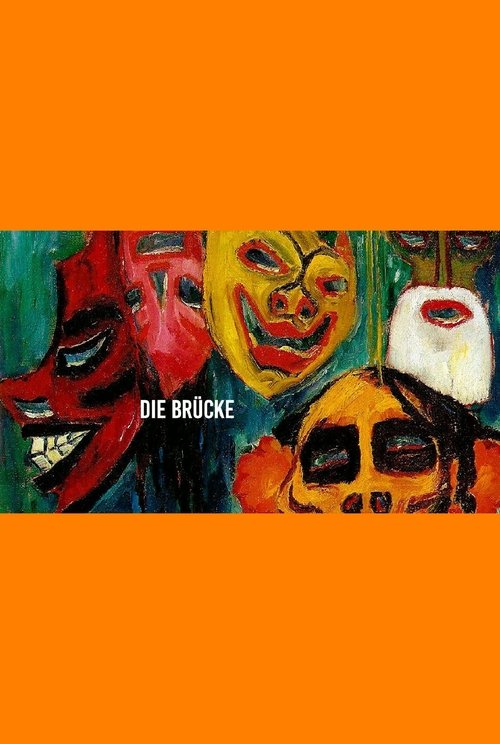
This movement marks the beginning of modern art in Germany. It is the German equivalent of French Fauvism, from which it draws its main inspiration, but it carries an Expressionist and social emphasis that is characteristic of Nordic 'angst.' The artists of Die Brucke were restless creatures, over-sensitive, haunted by religious, sexual, political or moral obsessions. Dramatic landscapes and nudes, mystical and visionary compositions, scenes of the countryside, the streets, the circus, the cafe-dansants and the demi-monde were their principal subjects. Their pure colours blaze in acid stridency, encompassed by rough, dry contours which show the influence of African art and primitive woodcuts. The work of the following is shown: Kirchner, Fritz Bleyl, Erich Heckel, Schmidt-Rottluff, Otto Muller, Emil Nolde and Max Pechstein.
Community
Vote on scenes, quotes, and characters for Die Brücke: The Birth of Modern Art in Germany (1972).
The moment that still lives in your head.
Starters for Die Brücke: The Birth of Modern Art in Germany
Your take
Rate this title
Tap half or full stars · 0.5–10 scale
Be the first Cinemoood rating
Open communitySign in to save your rating.
None yet
See all
Mee
2026